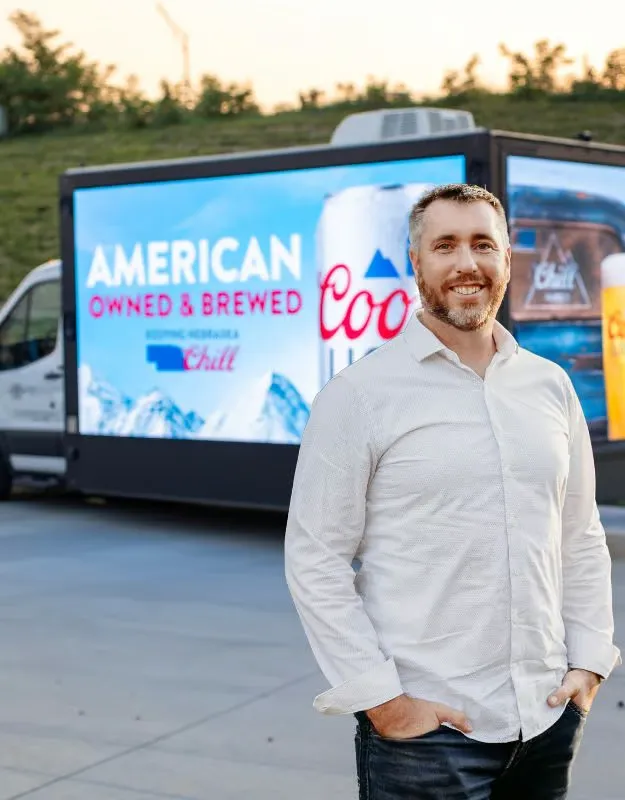

Issue #46: Cannabis Can't Buy Its Way Onto Google, Meta or TikTok. Here's What It Can Own.
The most restricted advertisers in America are running legal businesses. The answer isn't a better ad. It's a channel nobody else controls—inside your state's rules.
Editor's Note
The last issue of Digital Display Insider went out on June 4th.
That's on me, and I'm not going to dress it up. I tell clients to post consistently and give their audience real, useful information on a schedule they can count on. For four months, I didn't do either one myself.
Then life got full.
We've been building a new prototype here at Legion. I'll share more about it when the time is right.
Two of my three daughters are getting married. One of them is moving to Hawaii.
I've been running media for the 50 Mile March.
And in between, I've been trying to keep up with everything else that comes with running a business and a family.
None of that is an excuse. It's just what happened. I'm telling you because I'd rather be straight with you than pretend this newsletter never paused. I'm working to be better about this—starting with this issue.
So this issue is a restart. And I'm changing the format a little.
For the next several issues, each one will focus on one industry. What makes advertising hard for them, what they can control, and where a screen they own fits—or doesn't.
We're starting with the industry that has the hardest time buying advertising in America.
Cannabis.
Let's get into it.
— Jerry
Industry Focus: Cannabis Retail
A legal business that most media treats like it isn't
If you own dispensaries, you already know this list.
Google Ads: marijuana is a non-allowed recreational drug. Google's newer cannabis pilot runs in Canada only.
Facebook and Instagram: THC ads are prohibited. Only certified CBD and hemp get through.
TikTok: ads can't promote or provide access to recreational drugs.
LinkedIn: prohibited.
YouTube: dispensary promotion is age-restricted. Helping someone buy can get a channel terminated.
Business texting: carriers flag marijuana and CBD as content violations.
X is the one major platform that allows licensed, 21+-targeted cannabis ads. Snapchat allows a limited version after pre-approval.
That's it.
Let that land for a second.
A licensed operator in a state with a $29.1 billion legal market (2025 US sales) can't buy a search ad for the thing they're licensed to sell.
The "organic" route isn't safe either
Most operators shrug and say, "Fine. We'll build an audience on social."
Here's the truth: the audience you build on someone else's platform still belongs to them.
In December 2024, about two weeks after Meta updated its terms, cannabis businesses in several states reported their Instagram accounts shut down or shadow-banned. One New York dispensary account had roughly 11,000 followers.
Years of posting. Gone in a morning.
Followers you rent can be evicted.
Even the billboard is a rental—and it's getting harder to rent
So operators turn to outdoor.
But a digital billboard is a shared screen. A common setup is a 60-second loop with six advertisers, 10 seconds each.
That's 16.7% of the screen.
The other 83.3% of the time, someone else is on it. And the slot right after yours is for sale to whoever wants it—including the dispensary down the street.
Now add the rules.
New York banned cannabis billboards in December 2025. Ohio did the same in January 2026. Indiana, where cannabis isn't legal, banned marijuana advertising in any medium—aimed straight at Michigan dispensaries advertising across the state line.
You can't build a moat on land somebody else owns.
You bought the buildings. Now own the attention.
Multi-location operators already understand ownership.
You didn't rent a booth inside someone else's store. You bought or leased your locations. You built them out. You control what happens inside them.
But the streets between your stores? The corridors your customers drive every day? Right now somebody else controls the attention there.
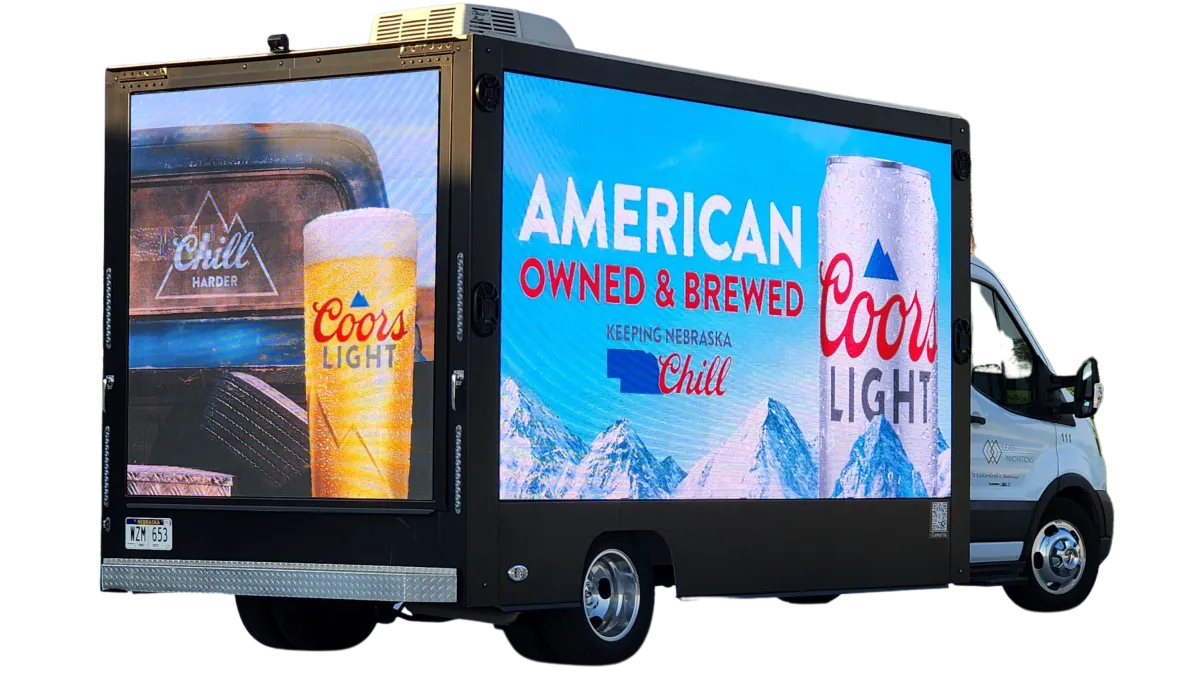
A mobile digital billboard you own changes that math.
100% of the screen is yours. Not 16.7%.
You decide the message. You decide the schedule. You decide where the screen goes—the corridor between Store A and Store B, the grand opening, the 21+ event, the job fair.
No ad review. No account to ban. No algorithm deciding who sees you. No vendor policy that changes next quarter.
If you owned the inventory, nobody could take your slot.
What owning the screen doesn't change
This is the part most vendors skip. I won't.
Owning the screen removes the platform gatekeeper. It does not remove your state.
Several states restrict cannabis ads on vehicles outright. Massachusetts, New York, Colorado, Washington and Connecticut all prohibit them. Maryland and Minnesota likely do too, through broader bans on outdoor or publicly visible advertising.
Maine is the clearest state that expressly allows licensees to put signs on a vehicle.
Most other states don't address vehicles directly. That usually means billboard-style rules apply to the screen:
- a minimum share of the audience that's 21+ (often 70% to 90%)
- buffer zones around schools, playgrounds and parks (200 to 1,500 feet, depending on the state)
- required warnings and license numbers
- no cartoons, no appeal to minors, no health claims
And cities add their own mobile-billboard ordinances on top.
So let me be blunt: an LED truck is not a loophole. If anyone pitches it to you that way, walk away.
It's a channel you control—used inside your state's rules, or not at all.
What the smartest operators put on an owned screen
The best cannabis content on an owned screen often doesn't look like a cannabis ad.
Wayfinding across locations. Name, address, hours. "Now open, exit 12." No product required.
Grand openings and relocations. Park the screen at the new store for opening week.
Hiring. Every new location needs a staff. Employment messaging isn't product advertising.
21+ events. Age-checked venues solve the audience-share problem.
Community and education. Expungement clinics. Responsible use. Impaired-driving awareness.
Loyalty sign-ups. Every customer who joins your list is reach no platform can take away.
Run every one of them past your compliance counsel for your state. Then build the route around buffer zones, keep GPS and play logs, and switch the screen to non-cannabis content when you pass through a school zone.
Who this is wrong for
I'd rather lose a sale than sell a truck that sits in a lot.
If every one of your stores is in a vehicle-ban state, a truck can't carry your cannabis advertising. Spend that money on your stores and your customer list.
If you don't have someone who owns compliance—approving creative, mapping buffers, keeping logs—hire that person first.
And if you only have one store, local search and your storefront will usually do more for you.
A truck is a real job. A driver. A schedule. Fresh content. Vehicle maintenance. Year one especially.
It's not for everyone.
Final thought
The cannabis industry has spent years asking permission. From Google. From Meta. From billboard companies. From platforms that can change their minds overnight.
Some of that permission isn't coming back anytime soon.
So stop asking for the part you can own.
We put everything in this issue—platform by platform, state by state, with sources—into a free guide called The Off-Platform Playbook. It also covers a seven-step compliance checklist for a screen that moves, and who should not buy a truck.
Reply to this email and I'll send it to you.
And if you run multiple stores in a state that allows it and you've pulled out a calculator, let's talk.
This is not legal advice. Rules are current as of October 1, 2026, and they change often. Confirm everything with your compliance counsel and your state regulator.
Have a truck on your lot this week?
2026 Ford Transit 350HD — $260,000 — Omaha, NE → Brand new build, ready to run. See specs and photos.
Keep it simple, keep it profitable, and build the legacy while you build the business.
— Jerry Teeter Founder, Legion LED Trucks
FAQ
Can dispensaries advertise on Google or Facebook? Not for THC products in the US, as of October 2026. Google lists marijuana as a non-allowed recreational drug, and Meta prohibits THC ads. Meta allows certified CBD and hemp ads only.
Which social platform allows cannabis ads? X allows licensed cannabis advertisers to target 21+ users in the states where they're licensed, after pre-certification. Snapchat allows limited cannabis ads after pre-approval.
Can a dispensary advertise on a truck or vehicle? It depends on the state. Massachusetts, New York, Colorado, Washington and Connecticut prohibit cannabis advertising on vehicles. Maine expressly allows licensee vehicle signs. Most other states apply billboard-style rules. Check with your regulator and counsel first.
What can a dispensary put on a mobile billboard? Where it's allowed, the lowest-risk content is brand and location awareness without product imagery, grand openings, hiring, 21+ events, community education and loyalty sign-ups. Your state's content, audience and buffer rules still apply.